Slow Down to Win Big: The Brain Science Behind Retro Casino Design and Smarter Betting
There's a reason your favorite sports betting app looks like a spaceship dashboard. Sleek gradients, minimal friction, one-tap deposits, animations that fire off every time you place a wager — none of that is accidental. The entire visual language of modern gambling platforms is precision-engineered to keep your thumb moving and your brain in a reactive, dopamine-chasing loop.
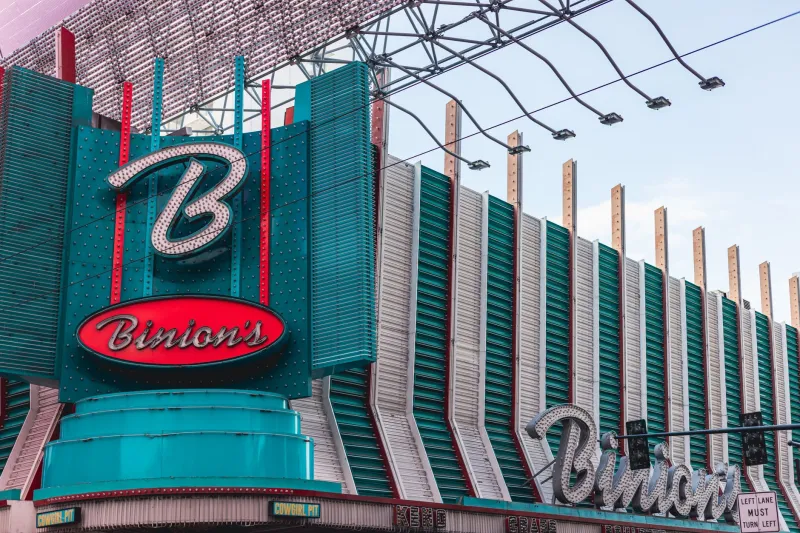
So when you land on Pin-Up Casino and you're greeted by warm vintage color palettes, classic pin-up illustrations, and game layouts that feel like they were pulled from a mid-century Vegas parlor, the contrast is jarring. And that jarring sensation? It turns out, it might actually be protecting your bankroll.
The Click-and-Bet Trap Nobody's Talking About
Behavioral economists have spent years documenting what they call "decision fatigue acceleration" in digital environments. The simpler and faster an interface makes an action feel, the less cognitive resistance a user generates before completing it. For casino platforms, this translates directly: fewer visual interruptions equal faster bets, larger bets, and more bets placed without deliberate thought.
Dr. Melissa Carver, a behavioral psychologist who consults on digital UX and gambling behavior, puts it plainly. "Minimalist interfaces are essentially removing the psychological speed bumps between impulse and action," she explains. "When everything is smooth and seamless, your prefrontal cortex — the part of your brain responsible for weighing consequences — barely gets a chance to check in."
The result is a betting style that feels decisive but is actually reactive. American players in particular, raised on fast-paced digital environments from mobile gaming to social media, are primed to respond to these design cues almost automatically.
Why Nostalgia Creates Friction — and Why That's a Good Thing
Here's where retro design flips the script in a genuinely counterintuitive way.
When you encounter imagery and aesthetic cues that feel nostalgic — think warm sepia tones, hand-illustrated artwork, typography that evokes the 1940s and 50s — your brain doesn't just register "pretty." It triggers what psychologists call a temporal displacement response. You're briefly pulled out of the immediate present and into a different emotional register. That mental shift, however subtle, creates a micro-pause in the decision-making process.
"Nostalgic stimuli activate memory and emotional processing centers simultaneously," says Dr. James Kowalski, who studies consumer psychology at a Midwest research university. "That dual activation means your brain is doing more cognitive work when it encounters these elements. You're not just reacting — you're contextualizing."
For a casino player, that contextualizing moment is enormously valuable. It's the difference between clicking "bet max" without thinking and actually considering whether that's the right call.
What Pin-Up Casino Is Actually Doing to Your Decision-Making
Pin-Up Casino's design isn't retro by accident or purely for aesthetic charm. The platform's visual identity — built around authentic vintage pin-up artwork, analog-style game interfaces, and a color palette heavy on burgundies, golds, and creams — creates multiple layers of what designers call "intentional friction."
Consider the game lobby. Rather than the frictionless infinite scroll of most modern platforms, the layout encourages browsing. The illustrated characters draw your eye. The game tiles have visual weight. You're more likely to pause, look around, and make a considered choice rather than defaulting to whatever the algorithm has pushed to the top of the feed.
This matters more than it sounds. Research published in the Journal of Gambling Studies found that players who spent more time in game selection — even as little as 30 additional seconds — showed measurably lower average bet sizes and longer session durations without proportional increases in losses. Slower selection correlates with more deliberate play.
The Trust Factor: Why Old-School Looks Feel More Honest
There's another psychological dimension worth unpacking: credibility perception.
American players have grown increasingly skeptical of slick, algorithm-heavy platforms. The polished aesthetics of many modern betting apps have started to feel less like quality and more like manipulation — and that instinct isn't entirely wrong. When everything is optimized to the point of frictionlessness, it can feel like the platform is working against you.
Retro design communicates something different. It signals craft, intentionality, and a certain confidence that doesn't need to hide behind flash. Dr. Carver notes that "vintage aesthetics tend to score higher on perceived authenticity in user testing. People associate them with transparency and craftsmanship rather than algorithmic optimization."
For US players who've spent years navigating the fine print of domestic loyalty programs and opaque bonus structures, that sense of authenticity carries real weight. A platform that looks like it has nothing to hide often feels like one that actually doesn't.
Practical Implications for Your Betting Habits
Understanding the psychology doesn't just make for interesting reading — it has direct applications for how you approach your sessions.
If you find yourself making impulsive bets on fast-moving platforms, the visual environment might be working against your better judgment. Platforms designed to slow you down — through visual richness, deliberate layout choices, and aesthetics that demand a second look — are effectively giving your decision-making brain more runway.
A few things worth paying attention to next time you log into Pin-Up Casino:
- Notice the pause. When you land on the homepage, do you feel the urge to immediately click something, or do you find yourself actually looking around? That looking-around instinct is your prefrontal cortex doing its job.
- Use the visual environment as a reset. If you've had a losing streak on a fast-paced platform and you're feeling the urge to chase, switching to a visually richer, slower-feeling interface can interrupt that reactive loop.
- Let the game selection take time. The design invites browsing. Use it. Players who engage with the selection process rather than defaulting to autopilot tend to make choices that align better with their actual preferences and risk tolerance.
Retro Isn't Nostalgia for Its Own Sake
It's tempting to dismiss vintage casino aesthetics as a marketing gimmick — a way to stand out in a crowded market by leaning into a distinctive visual identity. And sure, differentiation is part of it. But the behavioral science suggests there's something more substantive happening.
The design choices that make Pin-Up Casino look like a different era are also, functionally, making it a different kind of experience. One where the visual environment is working with your rational decision-making rather than trying to route around it.
In a landscape where most platforms are in a race to remove every possible moment of hesitation between impulse and action, a casino that builds thoughtful friction into its design isn't just aesthetically interesting. It's genuinely unusual — and for American players trying to play smarter rather than just faster, that difference might be exactly what they didn't know they were looking for.