Why Betting Slower Actually Makes You Richer: The Neuroscience of Nostalgia at the Casino
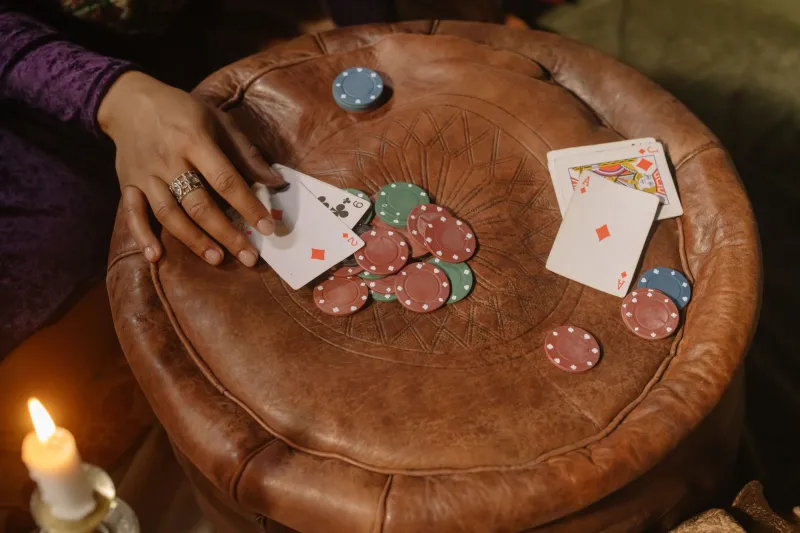
There's a moment every experienced gambler knows — the one where you've placed three bets in a row without really thinking, your stack is lighter than it was ten minutes ago, and you're not entirely sure how it happened. It's not bad luck. It's speed. And the modern online casino environment, with its flashing animations and instant-load everything, is practically engineered to keep you in that reactive, unthinking state.
So here's an interesting wrinkle: platforms leaning into retro, vintage-inspired aesthetics — think warm color palettes, analog-style interfaces, and slower visual rhythms — aren't just being stylish. They may actually be giving your brain the conditions it needs to make better calls.
The Two-Speed Brain Problem
Psychologists have spent decades studying what's often called dual-process theory — the idea that human thinking operates on two distinct tracks. System 1 is fast, automatic, and emotional. It's the part of you that reacts to a flashing jackpot counter or a ticking countdown timer. System 2 is slower, deliberate, and analytical. It's the part that actually calculates expected value, checks your remaining bankroll, and decides whether a side bet is worth the house edge.
The problem? High-stimulation environments — loud, fast, visually chaotic — almost exclusively activate System 1. When everything around you is urgent, your brain defaults to urgency. That's fine if you're dodging traffic. It's catastrophic if you're trying to manage a $200 casino session.
Vintage casino aesthetics work differently. The slower visual rhythm, the muted tones, the deliberate spacing — these cues don't scream at your nervous system. They give System 2 a fighting chance to show up.
What "Tactile" Actually Means in a Digital Space
Classic casino design borrowed heavily from the physical world — the weight of a chip, the resistance of a felt table, the mechanical click of a slot lever. None of that translates directly to a screen. But the design language that evokes those sensations? That absolutely does.
When a platform uses design elements that reference physical, tangible objects — illustrated card decks, analog-style betting counters, typography that feels like it was pressed into paper rather than rendered by an algorithm — it triggers what cognitive scientists call embodied cognition. Your brain isn't just looking at the interface. It's partially simulating the physical experience of interacting with it.
That simulation slows things down. Not in a frustrating way, but in the way that turning a decision over in your hands slows things down. You feel the weight of the bet before you place it, metaphorically speaking. And that feeling, however subtle, is associated with more deliberate choice-making.
The Nostalgia Factor: More Than Just Good Vibes
Nostalgia has a reputation as a soft, sentimental emotion. But behavioral economists have been quietly documenting something more interesting: nostalgic states tend to reduce impulsive financial behavior. When people feel connected to the past — even a past they never personally experienced — they demonstrate greater patience, longer time horizons, and more conservative risk assessments.
The working theory is that nostalgia anchors people in a sense of continuity. You're not just making a decision in this moment; you're making a decision as someone with a history, a pattern, a future. That psychological grounding is the enemy of the "what the hell" effect, the well-documented phenomenon where a single loss loosens financial inhibitions and leads to increasingly reckless follow-up bets.
For American players used to neon-soaked, algorithmically optimized platforms designed to maximize session length, stepping into a retro-styled environment can genuinely feel like a gear change. Not slower in a boring way — slower in the way that a well-paced meal is more satisfying than fast food.
Bankroll Management as a Byproduct of Environment
Here's where this gets practically useful. Most advice about bankroll management focuses on rules: set a limit, stick to it, walk away when you hit it. Good advice, universally ignored under pressure. The reason it gets ignored is that rules live in System 2, and as we've established, high-stimulation environments keep System 2 off the field.
Environmental design that activates deliberate thinking doesn't replace your bankroll rules — it makes them easier to follow. When the visual pace of a platform naturally invites a breath between decisions, you're more likely to check your balance before the next bet. When the aesthetic isn't screaming at you to go again immediately, you're more likely to actually process whether you should.
This is one reason platforms like PinUp Casino Suomi — built around a vintage aesthetic with genuine intentionality behind the design choices — tend to attract players who describe their sessions as more controlled, not just more enjoyable. The environment does some of the work that willpower usually has to do alone.
The American Player's Specific Challenge
US-based gamblers face a particular set of pressures that make this conversation relevant. The domestic gaming culture, heavily influenced by Las Vegas showmanship and the maximalist design philosophy of American commercial entertainment, has conditioned a lot of players to equate stimulation with value. Bigger, louder, faster means better.
But that conditioning is also why so many American players blow through sessions faster than they'd like and walk away feeling like they never quite had control. The game moved faster than their thinking did.
Nordic-influenced platforms, which tend to prioritize clarity and pace over spectacle, offer something genuinely countercultural in that context. It's not about being boring. It's about being in charge.
Vintage Isn't a Limitation — It's a Feature
There's a temptation to read retro design as a limitation — a nostalgic shortcut taken by platforms that can't compete on raw technological spectacle. That reading gets it exactly backward. The design choices that reference the physical, tactile, slower world of mid-century casino culture are deliberate responses to a problem that the most cutting-edge platforms have created: an environment so optimized for engagement that it's become hostile to thinking.
For American players who want to actually get better at managing their sessions — not just feel lucky occasionally — the aesthetic of a platform isn't decoration. It's infrastructure. And the vintage bet, as it turns out, might be the smartest one you make.